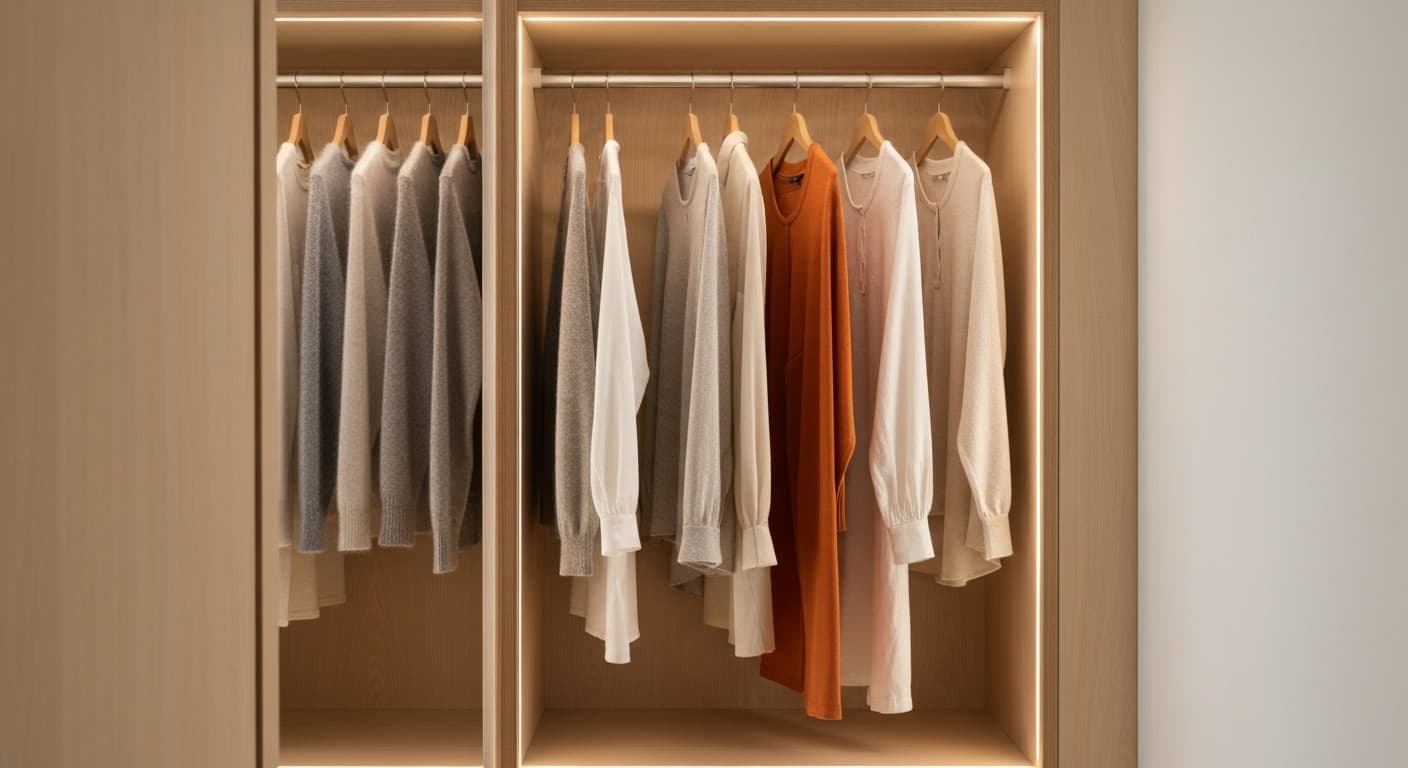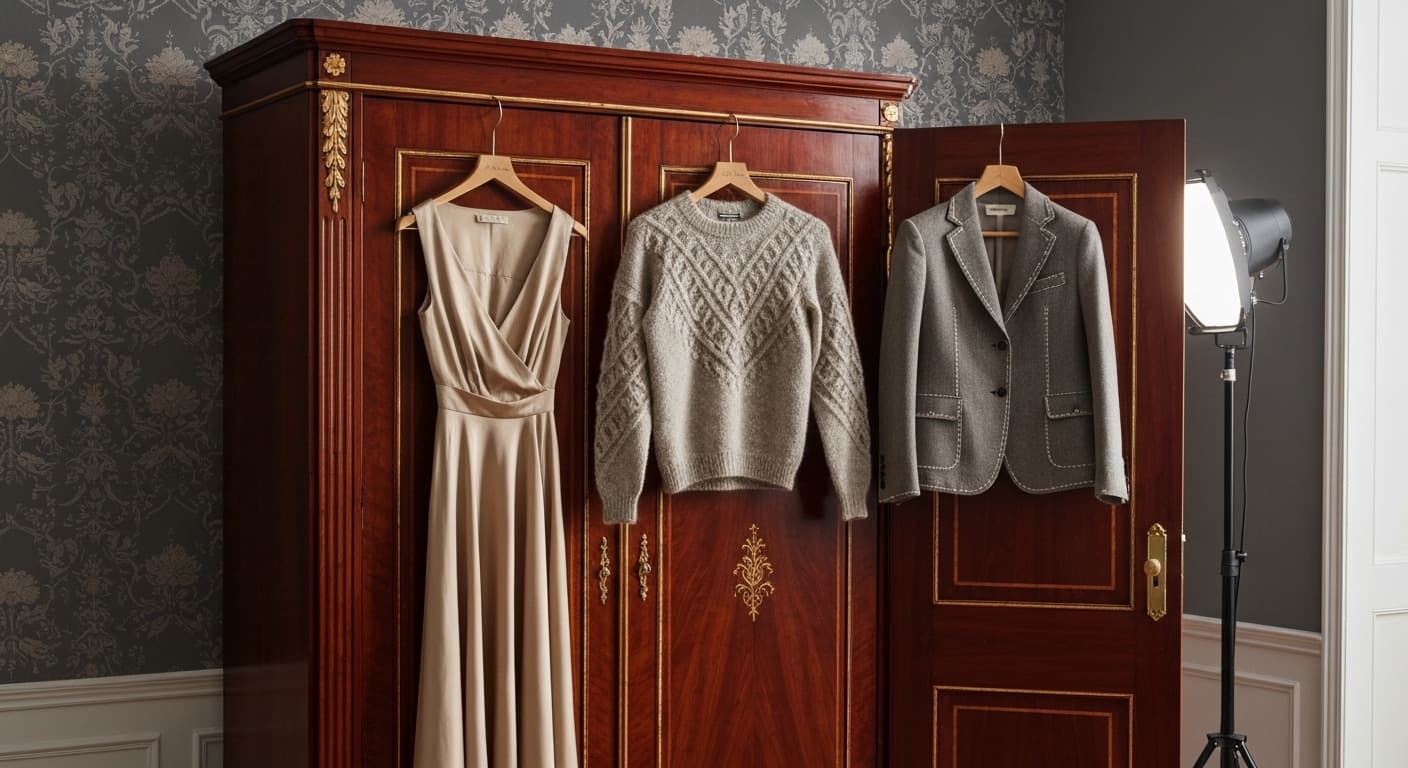
Most wardrobes contain at least one piece, usually more, that is genuinely loved and never actually worn. A silk dress bought for an occasion that never materialised. A jacket that was right the moment it was purchased and somehow never quite right since. A pair of shoes saved for something special that has not arrived.
The pieces stay. They are moved to the back, preserved carefully, occasionally taken out and assessed. Never worn. This is not forgetfulness. It is a specific psychological pattern, and understanding it explains a surprising amount about how most wardrobes actually function.
The psychology of saving
Behavioural economists have documented what they call anticipatory consumption: the pleasure derived from expecting a future experience rather than having it. When you buy a special piece, part of its value is in the anticipation of wearing it. The right occasion will come. You will feel exactly right. Everything will align.
The problem is that the anticipated occasion is always slightly better than any real one. No actual dinner, event, or Saturday morning quite matches the imagined moment the piece was saved for. So it waits. And the longer it waits, the more weight it accumulates: the more the real occasion will need to justify the anticipation. Eventually it reaches a kind of ceremonial status where no occasion feels sufficient.
The piece you are saving is not waiting for the right moment. It is waiting for a moment that does not exist.
The identity mismatch
A second pattern: pieces bought for a version of yourself you were trying to become. The bold colour purchased when you wanted to dress more expressively. The formal coat from when you were moving into a more structured chapter. The playful print you bought when you wanted to be someone who wore playful prints.
These pieces often remain unworn not because the occasion does not arise but because the identity shift did not fully happen. The piece was aspirational, an investment in a future self, and the future self turned out to be recognisably similar to the present one. This is not a failure. It is information about who you actually are, as opposed to who you intermittently wish you were.
The most useful wardrobe audit question is not “when will I wear this?” It is “is this for who I am, or for who I was trying to be?” Your style archetype is the most reliable compass here, and most identity-mismatch pieces belong to a secondary or aspirational archetype rather than your primary one.
The wear-it-now argument
In wardrobe psychology, the principle is straightforward: the best day to wear your best things is today. Not because life is short, though it is, but because the psychological cost of saving is real and consistently underestimated.
Every day a piece spends saved rather than worn is a day it is not doing the one thing clothing is for: making you feel like yourself at a specific moment in your actual life. A dress worn on an ordinary Tuesday that makes you feel right is doing its job. A dress preserved for an imaginary occasion is a decorative object.
The practical test: take the piece you are saving and ask what you are actually waiting for. Name it specifically, not “something special” but a real occasion type with real parameters. If you cannot name it, the occasion is imaginary. Wear the piece on the next ordinary occasion that comes close enough. It works. The anticipation turns out to have been the only obstacle.
When to let go
Some saved pieces genuinely belong to a different version of your life and will not find a moment in this one. These are distinct from identity-mismatch pieces. They were right, for a chapter that has closed: a dress from before a significant body change, a formal coat from a job you no longer have, a piece from a relationship that is over.
These carry a specific gravity that is about memory and transition, not anticipation. Keeping them is fine if they bring something. Keeping them out of reluctance to accept that the chapter is over is different, and most people know the difference when they are honest about it.
The decision environment of your closet is shaped by everything in it, including the things that do not work. Pieces kept out of guilt or inertia do not sit quietly. They add noise to every morning when you open the door.