Most people can describe what they do not want to wear more clearly than what they do. They know with certainty that a stiff corporate blazer feels wrong, or that maximalist prints are not for them, or that they would never wear something with visible logos. The avoidances are sharp. The positive instincts are harder to name.
That gap, between the avoidance and the positive instinct, is where your style archetype lives.
What an archetype is
The concept of archetypes as a framework for personality and identity runs through psychology from Carl Jung's foundational work on universal patterns of human experience. Applied to personal style, an archetype is not a category you are sorted into. It is a centre of gravity: the way your instincts naturally organize themselves when you are dressing without pressure or audience.
Most people are a primary archetype with a secondary influence. The combination is where your personal style language actually lives. What follows are four archetypes. Read them as descriptions, not prescriptions. You will recognize yourself, usually within the first two sentences of the one that fits.
The Refined
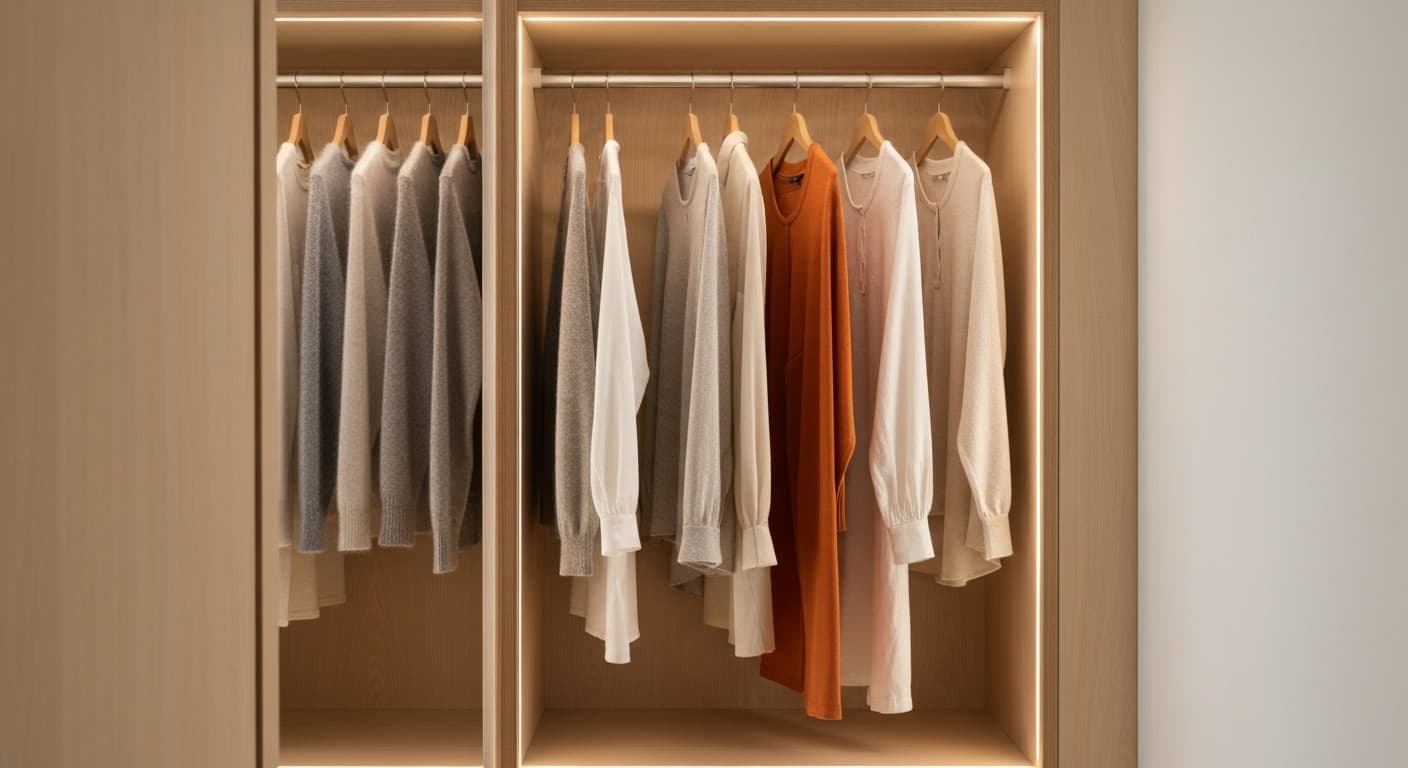
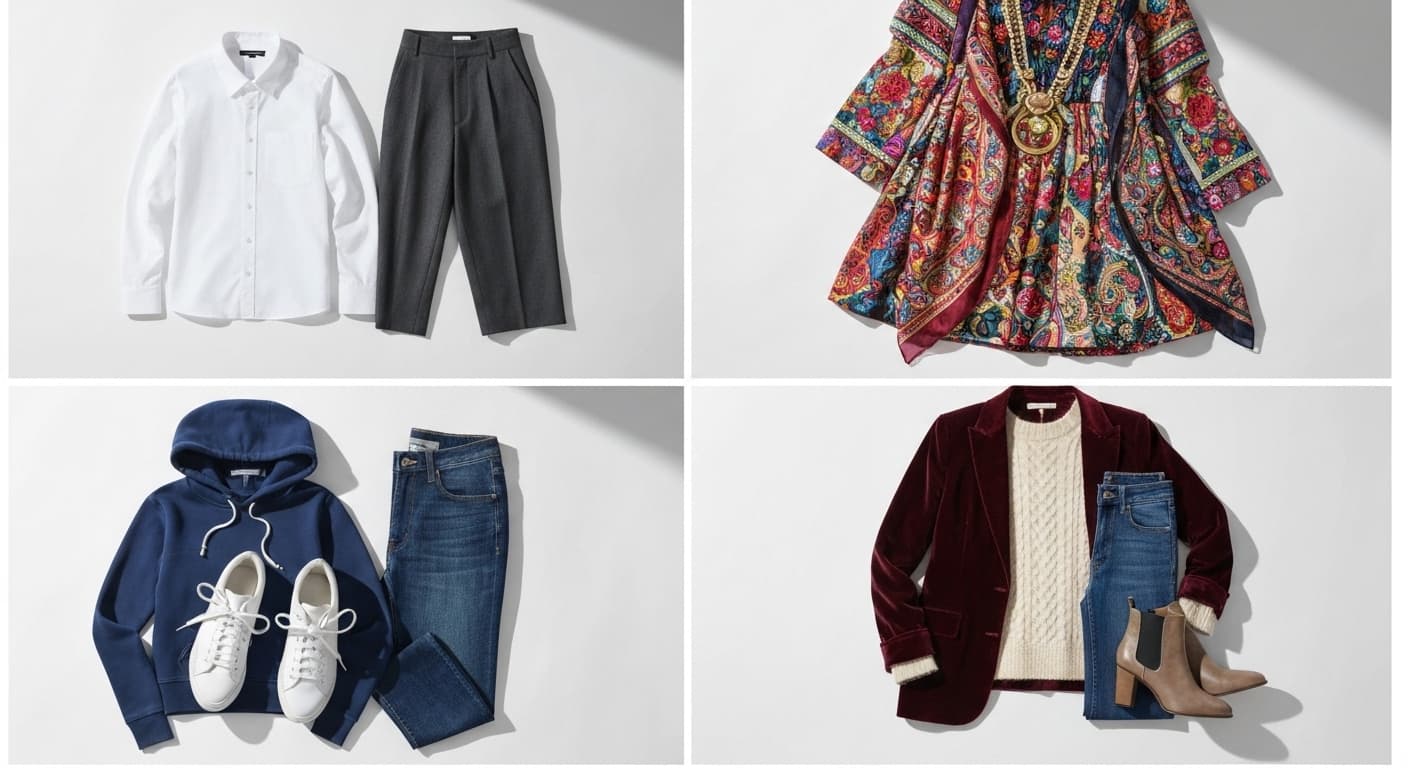
The Refined person has a standard. Not a rigid rule, a standard. They know the difference between a good fabric and a mediocre one, reach for the same silhouette in different colourways and do not feel limited by this. Their closet has fewer pieces than most and more of each piece gets worn. They buy less often and better.
What “I have nothing to wear” means for the Refined: you probably have too much of the same thing. Multiple versions of a piece you already have, rather than the one or two extensions that would fill actual gaps. The Refined wardrobe benefits from being audited more often than it benefits from being added to.
The Refined is flattered by clean lines, investment fabrics, a restrained palette, and visible quality. What does not work: visual noise, ironic pieces, high-low mixing that reads as inconsistent rather than intentional.
The Expressive
The Expressive person dresses communicatively. Clothing is a language and they are fluent in it. They reach for the unexpected piece first and build around it. Trend-aware but not trend-driven, they absorb what is happening and filter it through their own eye. Their closet is more varied than most, and most of it gets worn, even the pieces that seem impractical.
What “I have nothing to wear” means for the Expressive: occasion mismatch. The right pieces exist but not for the specific register of today's situation. Expressive wardrobes often have strong evening options, strong casual options, and a gap at the middle register: the “considered but not formal” zone that covers most of real life.
The Expressive is served by 2026 maximalism, pattern mixing, colour contrast, tactile fabric, and vintage or one-of-a-kind pieces. The current trend cycle favours this archetype more than any other.
The Functional
The Functional person has already eliminated the things that make them hesitate. Their wardrobe is infrastructure: it serves their life efficiently and without drama. They are not interested in style for its own sake, but they are interested in looking right for the context, and they are good at it. Clothing decisions are fast because they have pre-answered most of the questions.
What “I have nothing to wear” means for the Functional: range gaps. The closet covers usual contexts well and fails on the edges, a formal occasion, a very casual weekend, a situation outside the routine. The Functional wardrobe does not need more basics. It needs the one or two pieces that extend coverage into the edge cases.
The Functional is served by versatile anchor pieces, machine-washable quality fabrics, and the capsule structure in its most literal form. What does not work: statement pieces bought without a clear use case, trend-driven purchases that require new context to wear.
The Transitional
The Transitional person is in motion. Something has changed, a job, a life chapter, a decade, a shift in who they are, and the wardrobe has not caught up. They are between two versions of themselves and neither the old clothes nor the new ones feel fully right. This is the archetype that experiences the “nothing to wear” feeling most acutely, and it is the least about the clothes.
What “I have nothing to wear” means for the Transitional: the instinct is still forming. The old anchors no longer feel like you; the new aesthetic is not fully committed to yet. This is not a wardrobe problem. It is an identity moment, and it resolves with time and deliberate experimentation: wearing things that feel slightly unfamiliar, noting what sticks, discarding what does not.
The Transitional is served by small, low-commitment experiments. One new piece in a direction that feels interesting, worn enough times to evaluate honestly. The worst response to a transitional phase is a large wardrobe overhaul. It replaces one confused closet with another.
Recognizing yours
You do not need a quiz. The archetype you are is the description you recognized before finishing reading it. Most people have a clear primary and a secondary that shows up in the exceptions: the Refined who keeps one expressive piece they love, the Functional who has a quiet interest in texture and colour they never quite act on.
Naming your archetype does not restrict what you can wear. It gives you a stable reference point for every decision — a way of asking “is this for me, or am I trying on someone else's style?” The answer is usually immediate once you have the frame.
Understanding this is also the foundation of the capsule approach. A Refined capsule looks nothing like a Functional capsule. The logic is the same; the contents are determined by who you are.