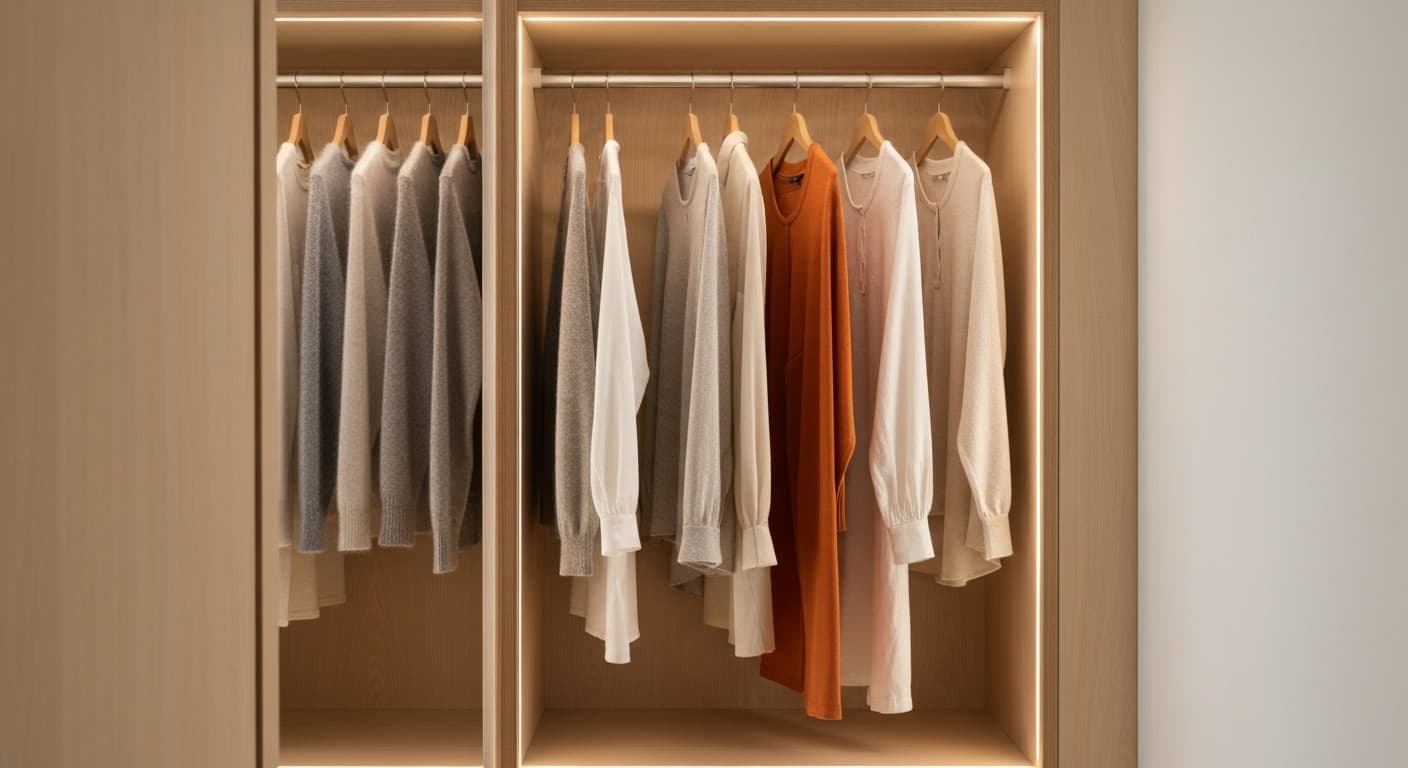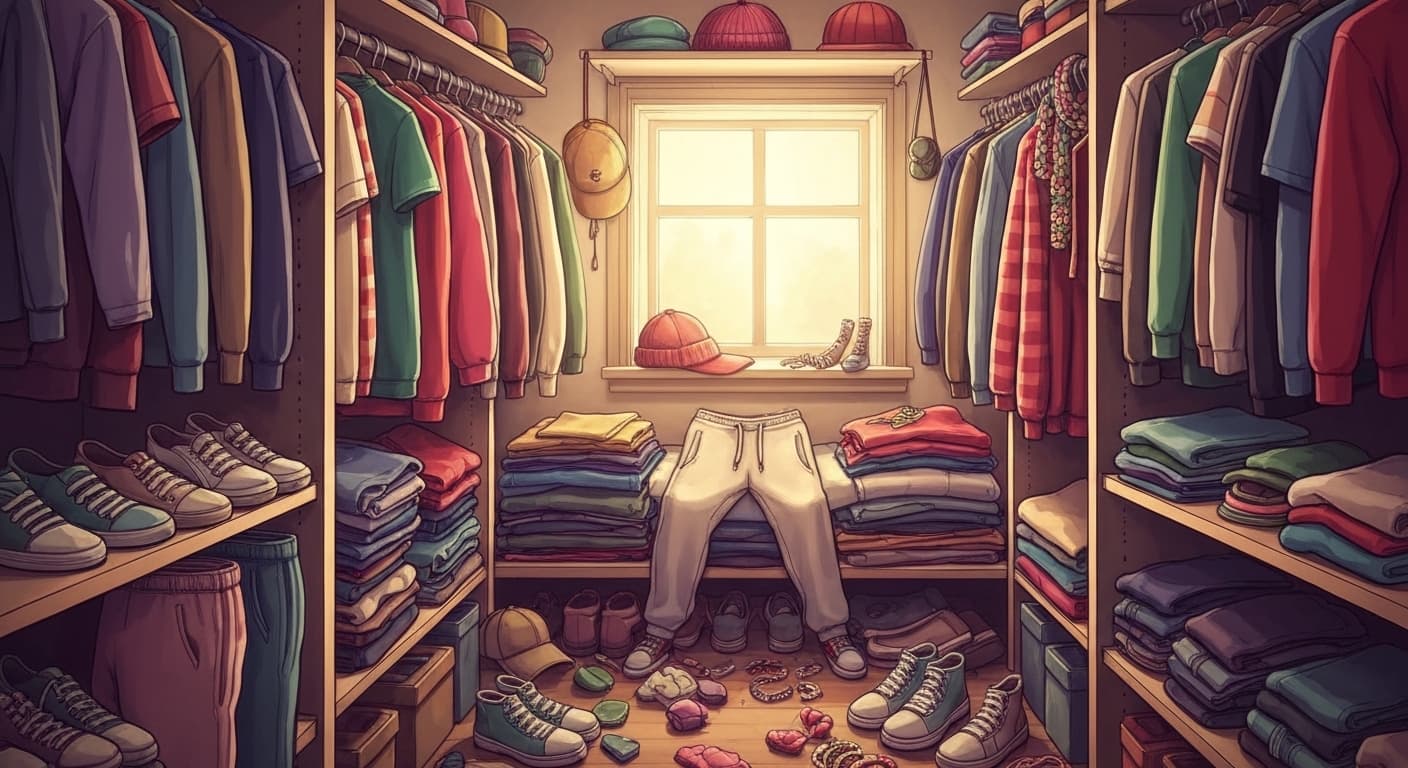
The most common wardrobe problem is also the most misdiagnosed one. “I have nothing to wear” is rarely literally true. The person saying it is usually standing in front of a full closet. The problem is not scarcity. It is something else entirely, and treating it as a shopping problem — the most common response — makes it worse.
What is actually being said
When someone says “I have nothing to wear,” they mean one of three things:
Nothing feels right for who I am today. The emotional state in the morning changes what feels appropriate. Clothes that worked yesterday feel wrong today because something has shifted: mood, energy, context, confidence. The closet has not changed. The person has.
Nothing works for what I specifically need. The occasion has specific requirements the current closet does not confidently meet. A particular register, a formality level, a context. This is a real gap, but it is almost always a one or two piece gap, not a full wardrobe problem.
I am overwhelmed by the options. Paradoxically, the more options a closet contains, the harder the decision becomes. Barry Schwartz's research on the paradox of choice showed that an abundance of options does not increase satisfaction. It increases anxiety about making the wrong choice. A closet with 200 items does not feel like freedom. It feels like 200 opportunities to choose wrong.
The anxiety loop
There is a specific cognitive pattern that plays out in front of a full closet when the decision is hard. You pull something out, evaluate it, put it back. Pull something else. Evaluate again. Each cycle the anxiety about choosing wrong increases, not decreases.
This is not indecisiveness. It is a feedback loop. The evaluation itself generates doubt, which makes the next evaluation harder. Psychologists studying anticipatory anxiety describe this as the mind running simulations of negative outcomes before they occur. In the context of getting dressed, the negative outcome is social: arriving somewhere and feeling like you made the wrong call, all day.
The loop breaks in one of two ways. An external voice — someone says “wear the blue.” Or internal clarity: you know enough about what works on you that the decision takes seconds rather than minutes. The first is what a good stylist provides. The second is what style knowledge — about your undertone, your silhouette, your archetype — builds over time.
Why more clothes is the wrong fix
The standard response to “I have nothing to wear” is shopping. It feels logical: if nothing works, adding something new should solve it. But it rarely does.
A new piece added to a disorganised decision environment does not fix the environment. It becomes part of the noise. Unless the new piece fills a named gap, a precise occasion or a specific silhouette that was genuinely missing, it gets evaluated and rejected alongside everything else on the days when the feeling hits.
The capsule approach addresses this differently. Instead of adding to the system, it reduces the decision surface so the closet becomes answerable rather than overwhelming. Most “nothing to wear” problems dissolve when the wardrobe has fewer, better-connected pieces rather than more.
What actually helps
Three things reliably break the “nothing to wear” loop, and none of them involve buying anything.
Name the actual problem. Before opening the closet, be specific: is this a mood mismatch, a gap for a specific occasion, or an overwhelm problem? The answer determines the solution. Mood mismatch needs a trusted voice or a pre-decided default. A specific gap needs a targeted purchase. Overwhelm needs reduction, not addition.
Build defaults for the most common situations. A default is not a uniform. It is a pre-decided answer to a recurring question: what you wear to the office on an ordinary Tuesday, what you wear to a casual dinner with people you know. Defaults exist so you do not have to make the decision from scratch on the mornings when you have the least capacity to make it.
Know your style pattern. The “nothing to wear” feeling hits hardest when there is no settled sense of what your style actually is. When every morning requires re-evaluating your identity alongside your clothes, the closet becomes a problem to solve rather than a resource to use. Understanding your style archetype gives you a stable reference point that makes individual decisions faster.
The deeper issue
The “nothing to wear” feeling is, at its core, a confidence problem dressed as a logistics problem. You are not missing clothes. You are missing certainty: about what works for you, what the occasion requires, and what version of yourself you want to present today.
That certainty is not something a new purchase provides. It builds as you understand more clearly what works on your body, in your undertone, for your life. A good stylist accelerates it. And eventually, it becomes something you just know.