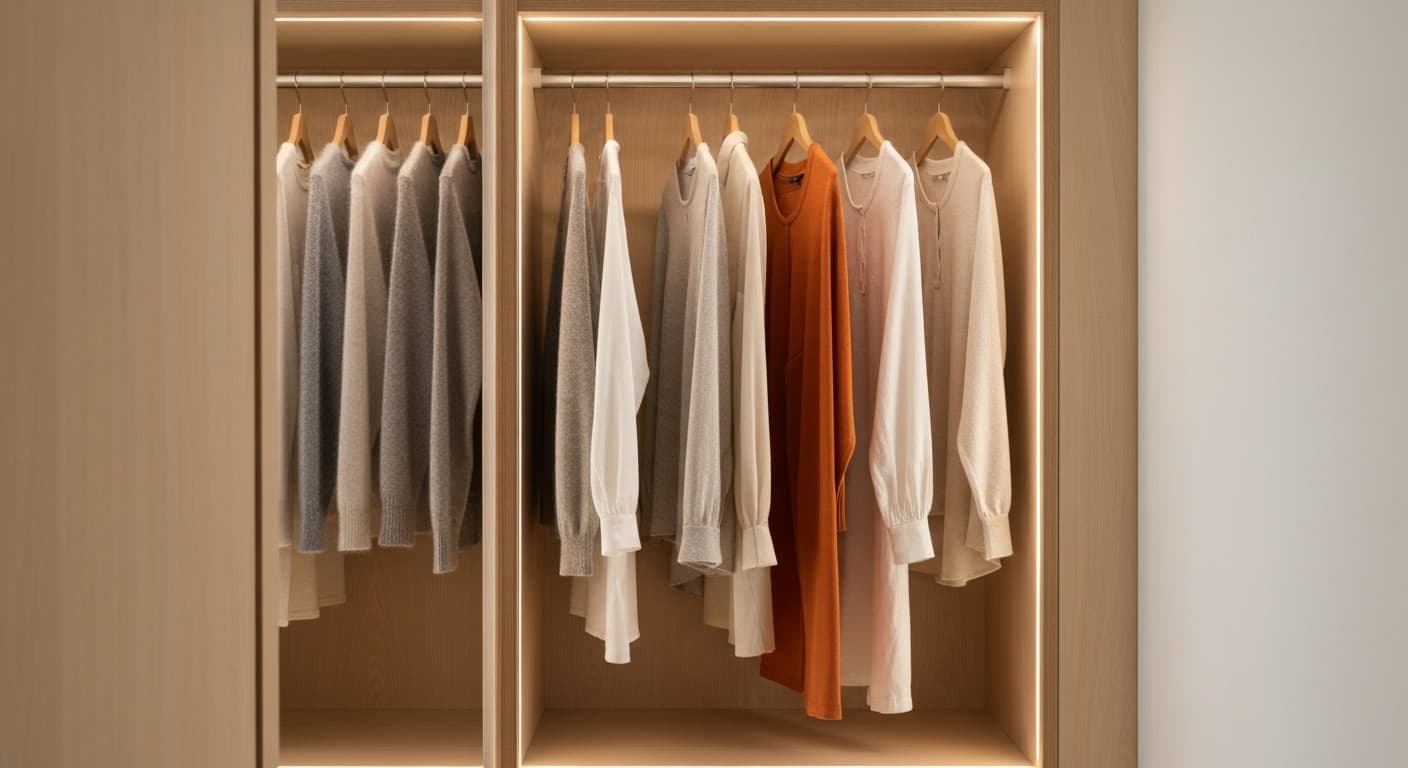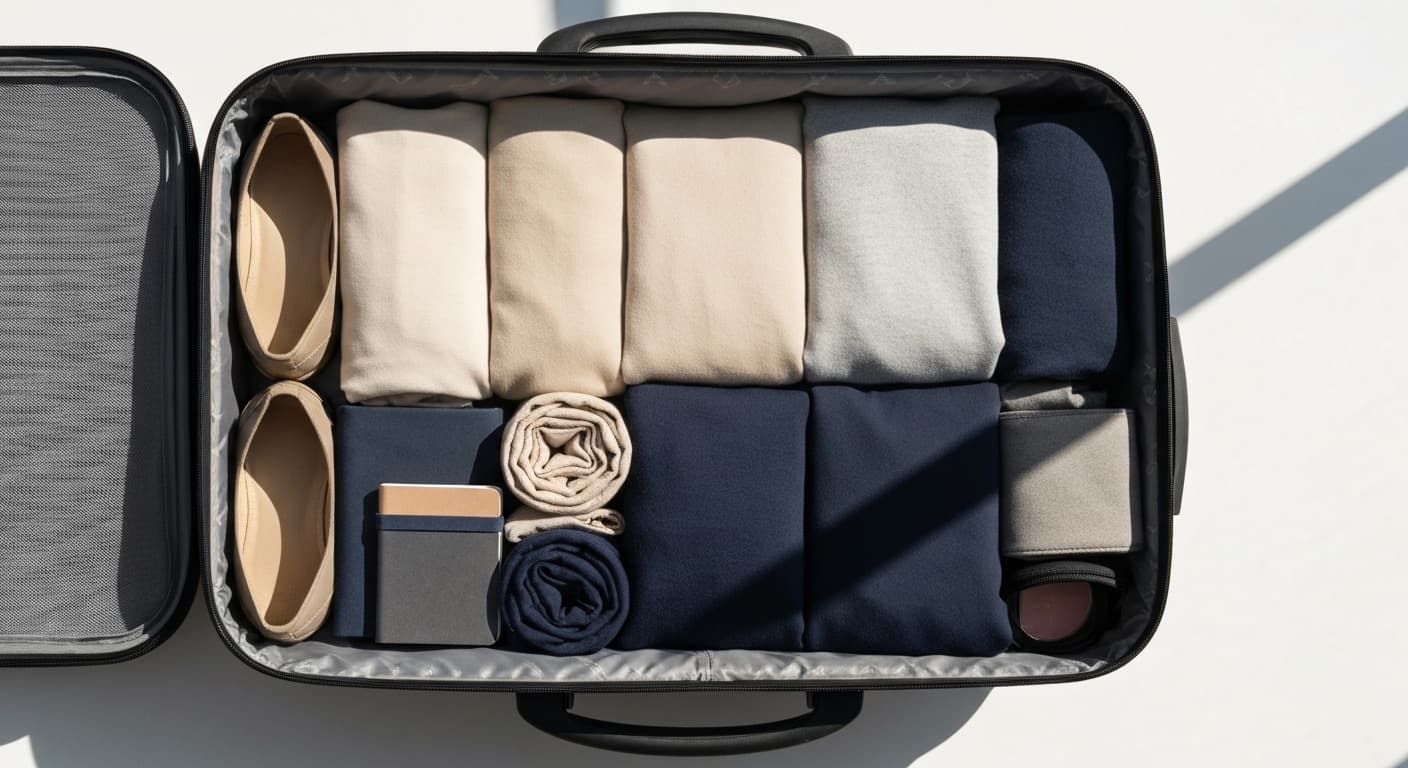
Packing is a stress test for your wardrobe. At home, you have the entire closet to rescue a bad decision. On the road, you have what you brought. This constraint is clarifying: the pieces that work in a travel wardrobe are the same ones that should anchor your wardrobe at home. And the way most people pack, too much, with too little coherence, reveals exactly what is broken about their closet before they ever leave.
Why most people overpack
Overpacking is the same anxiety that produces the “I have nothing to wear” feeling at home, just compressed into a suitcase. The logic is: I cannot predict exactly what I will need, so I will bring options. But options without a framework are just weight. More clothes does not produce more certainty. It produces more decisions, at exactly the moments when you have the least context to make them well.
Research on travel decision-making consistently shows that travellers overestimate the variety they will actually want and underestimate the cognitive cost of managing it. Most people on a ten-day trip wear the same five or six pieces repeatedly. The rest travels in the suitcase, unworn, and comes home to be washed without being used.
The foundation: anchor pieces
A functioning travel wardrobe is built on the same logic as a capsule at home: a small set of pieces that work together, so everything you packed can be combined with everything else. Travel compresses the requirement. A seven-day trip needs to be answerable from a single carry-on, which means each piece has to pull more weight.
Start with two or three anchor pieces, the items that will appear in multiple outfits. A dark well-fitted trouser. A clean versatile top in a neutral that works with your undertone. A single outer layer that covers every temperature and register variation you will encounter. Those three pieces already give you the bones of six or seven combinations before you have added anything else.
The multiplication principle
Every piece you add should multiply the combinations already there, not introduce new standalone outfits. A piece that only works one way, one combination, one occasion type, is a poor travel piece regardless of how much you love it at home.
The test: hold a potential travel piece against your anchors. How many of them does it combine with? If the answer is one, leave it behind. If the answer is three, bring it. This is the same logic as the extension piece rule at home: pieces that cannot be worn with at least two anchors are orphans, and orphans waste space.
What fabric to bring
Travel rewards fabrics that recover from packing and temperature variation. Merino wool is the most versatile travel fabric available: it regulates temperature across a wide range, does not wrinkle significantly, and can be worn multiple days without washing. Ponte knit, jersey, and viscose blends share similar properties. Avoid stiff structured fabrics that wrinkle badly (linen at its worst), anything that requires steaming before it looks right, and anything that holds smell.
The texture register of your travel wardrobe should be slightly lower-maintenance than what you wear at home. Save the velvet and the boucle for places with an iron.
The occasion gap
Most packing failures are not about everyday outfits. Those are usually handled. The failure point is the occasion gap: the one formal dinner, the one very casual beach day, the one business meeting that sits outside the rest of the trip's register.
One or two pieces that shift the register of your anchors cover most occasion gaps without adding significant volume. A silk shirt elevates a dark trouser from daytime to evening. A linen shirt transforms the same trouser for a casual coastal setting. The occasion gap is solvable with a single piece, not a separate wardrobe.
Shoes: where most packing breaks down
Shoes are the highest-weight, lowest-versatility item in most suitcases, and most people bring too many. The rule: two pairs maximum for trips up to ten days, three for longer. One covers walking and casual settings; one covers smart and evening. Both must work with every bottom you have packed. A shoe that only works with one outfit is not a travel shoe.
If this feels restrictive, it is worth examining why. It often reveals that your default outfits at home depend on specific shoe-trouser combinations that cannot be varied. That is a closet issue worth addressing separately. Your autopilot outfits should be flexible enough to work across two shoe types, not one.
The day-before test
The night before you leave, lay everything you plan to pack on a bed and count the outfits you can assemble. If the number is less than the days you are travelling, you need more combinations. If the number is greater than twice the days you are travelling, you are bringing too much. Aim for combinations roughly equal to the days, with two or three spares. Everything else stays behind.