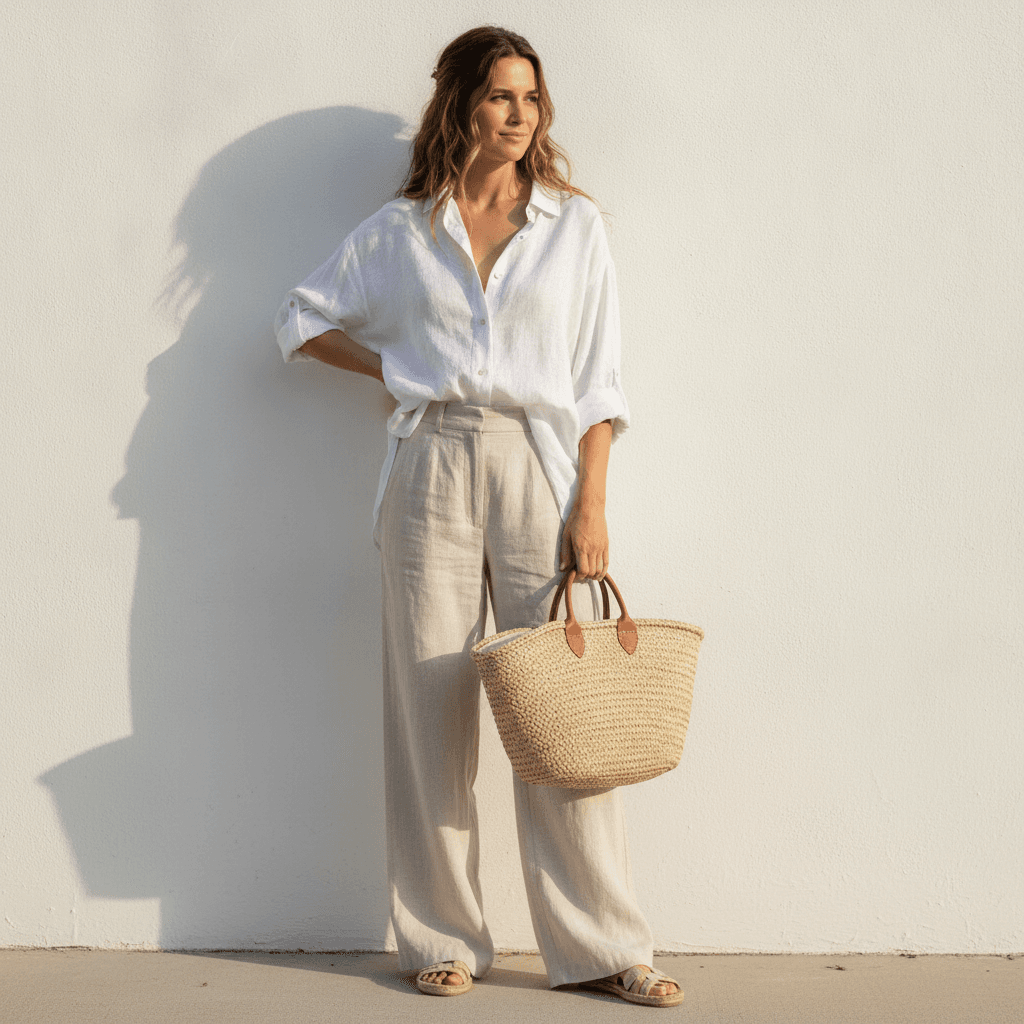
Most people treat the slip dress as a going-out piece: one occasion, one way of wearing it, worn once or twice a year. That reading is the limitation.
The slip dress changes completely depending on what surrounds it. Layer a blazer over it and it becomes a work outfit. Layer a t-shirt under it and it becomes a street look. Wear it alone and it is the whole argument. The piece stays the same. The decision about what to put with it is where the outfit happens.
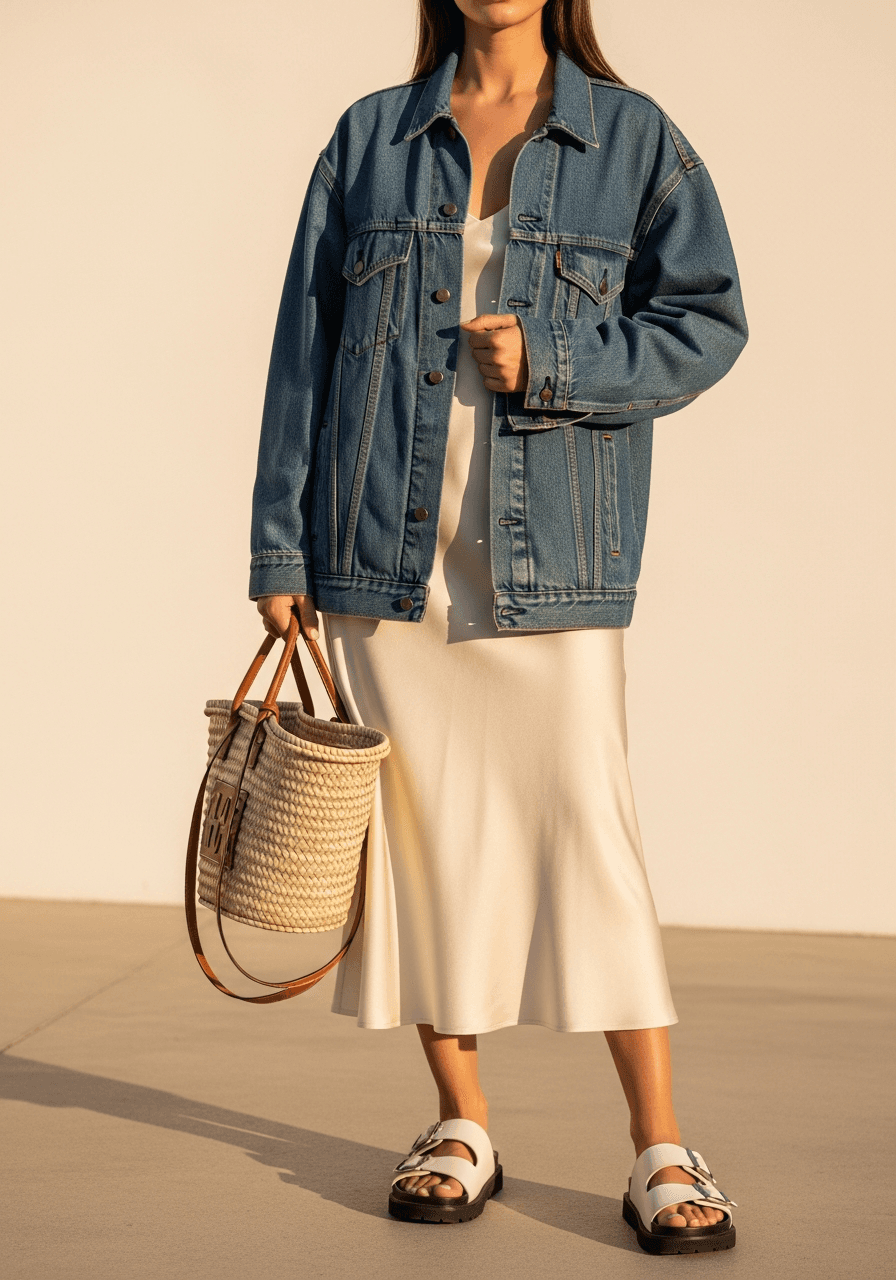
The Sunday Morning
- Cream satin slip dress
- Denim jacket — draped over both shoulders, not worn in the sleeves
- White leather sneakers
- Small leather crossbody bag
Why it works
Draping the jacket over the shoulders instead of wearing it changes the entire reading. The jacket becomes an accessory, not a layer, and the slip dress stays the main event underneath. The contrast between soft satin and raw denim is deliberate. Nothing needs to match. The moment the jacket goes on the shoulders, the outfit has a point of view.
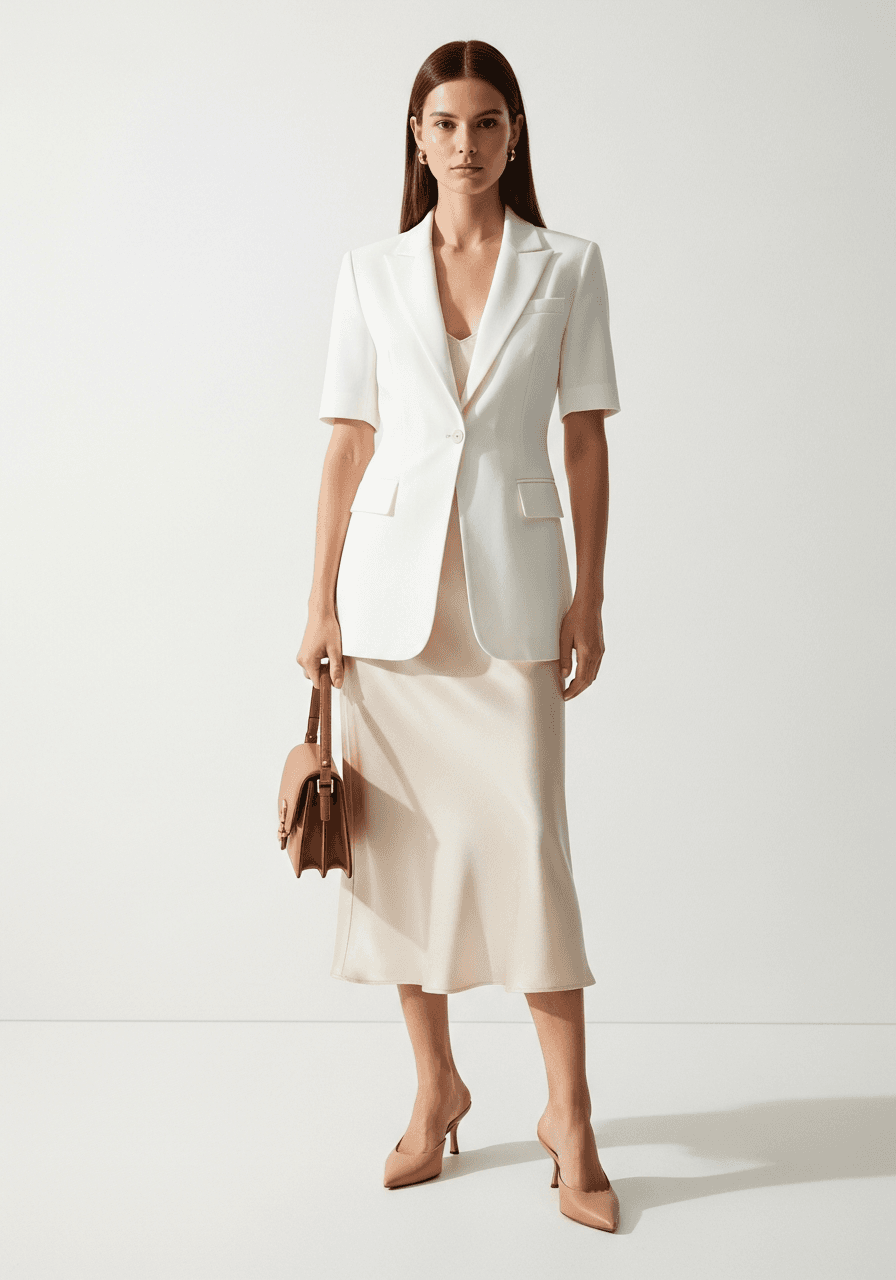
The Office Pull
- Cream satin slip dress
- Tailored blazer in ivory or warm beige — fits properly at the shoulder
- Block-heel loafers or pointed-toe pumps
- Structured leather tote
Why it works
The blazer converts the slip dress from evening to daytime completely. It needs to fit properly at the shoulder: an oversized blazer reads as borrowed rather than styled. Nobody looking at this outfit can tell what is underneath. The satin hem showing below the blazer hem is the only signal that something unexpected is happening, and that is exactly right.
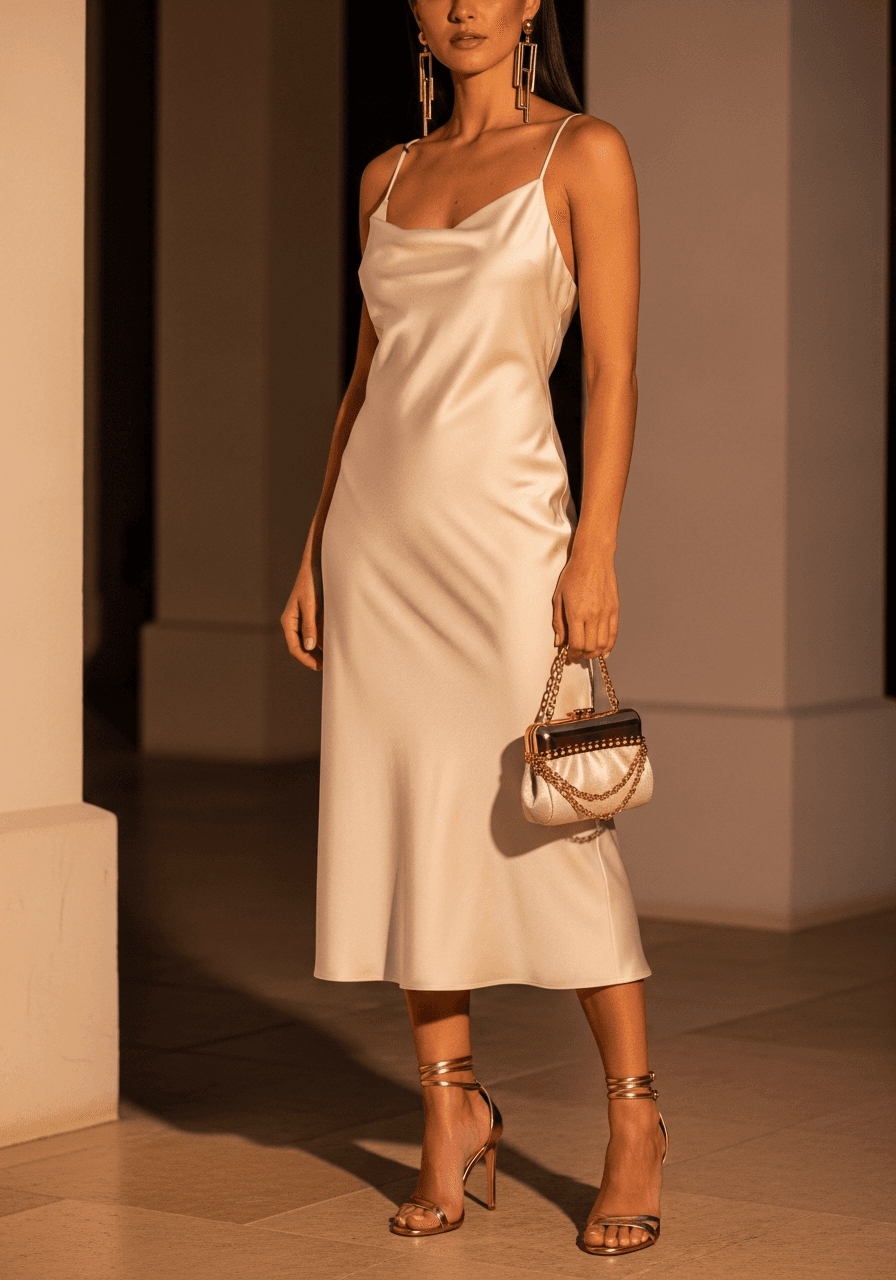
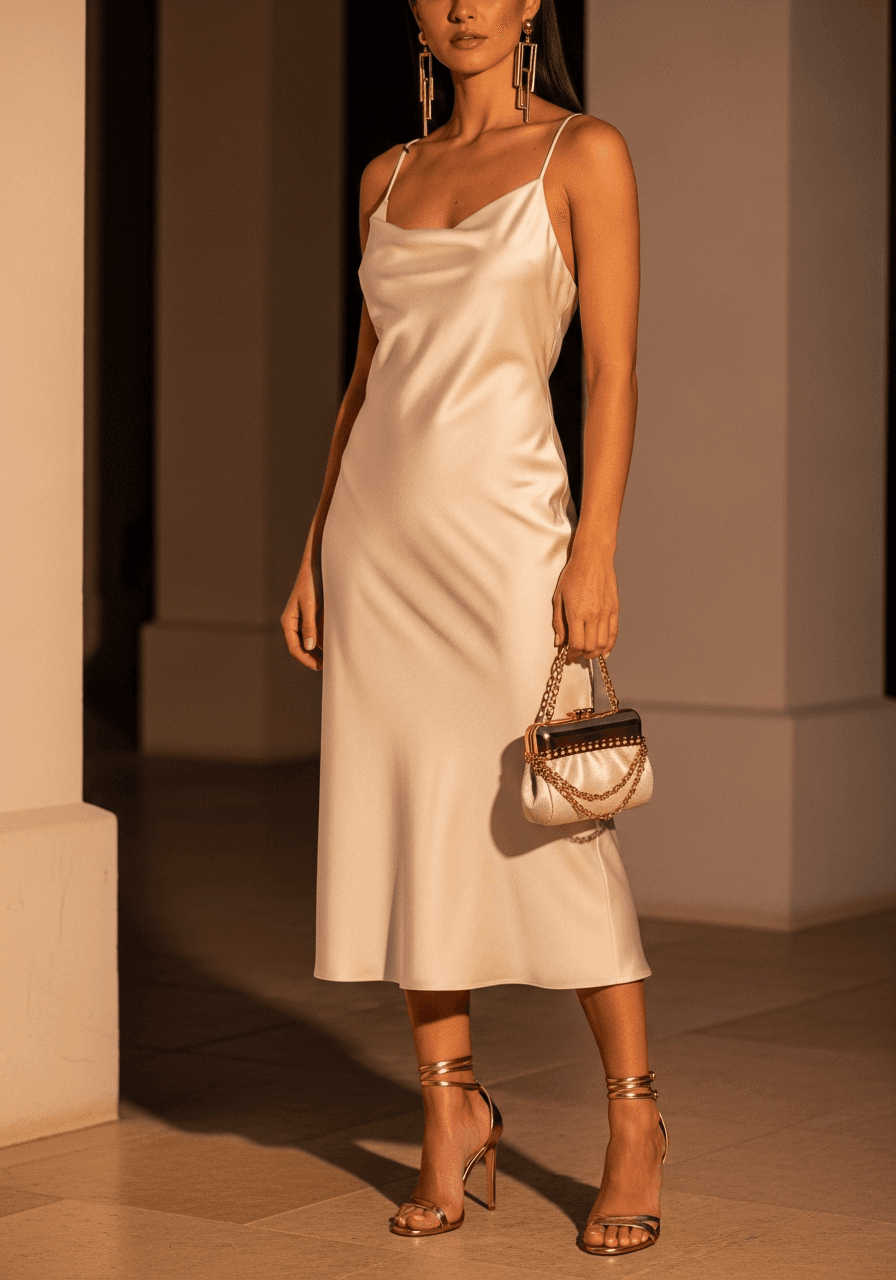
The Night Version
- Cream or champagne satin slip dress — worn alone
- Strappy heeled sandals in gold or nude
- Small metallic or satin clutch
- Delicate gold jewelry: simple hoops, one thin necklace
Why it works
The slip dress worn alone is a confidence move. Nothing added, nothing layered. Satin catches light in a way no other fabric does, and the simplicity of the silhouette is what registers as intentional. The shoes need a heel to hold up the formality. Flat sandals shift the reading toward nightgown rather than evening outfit, and that distinction is not subtle.
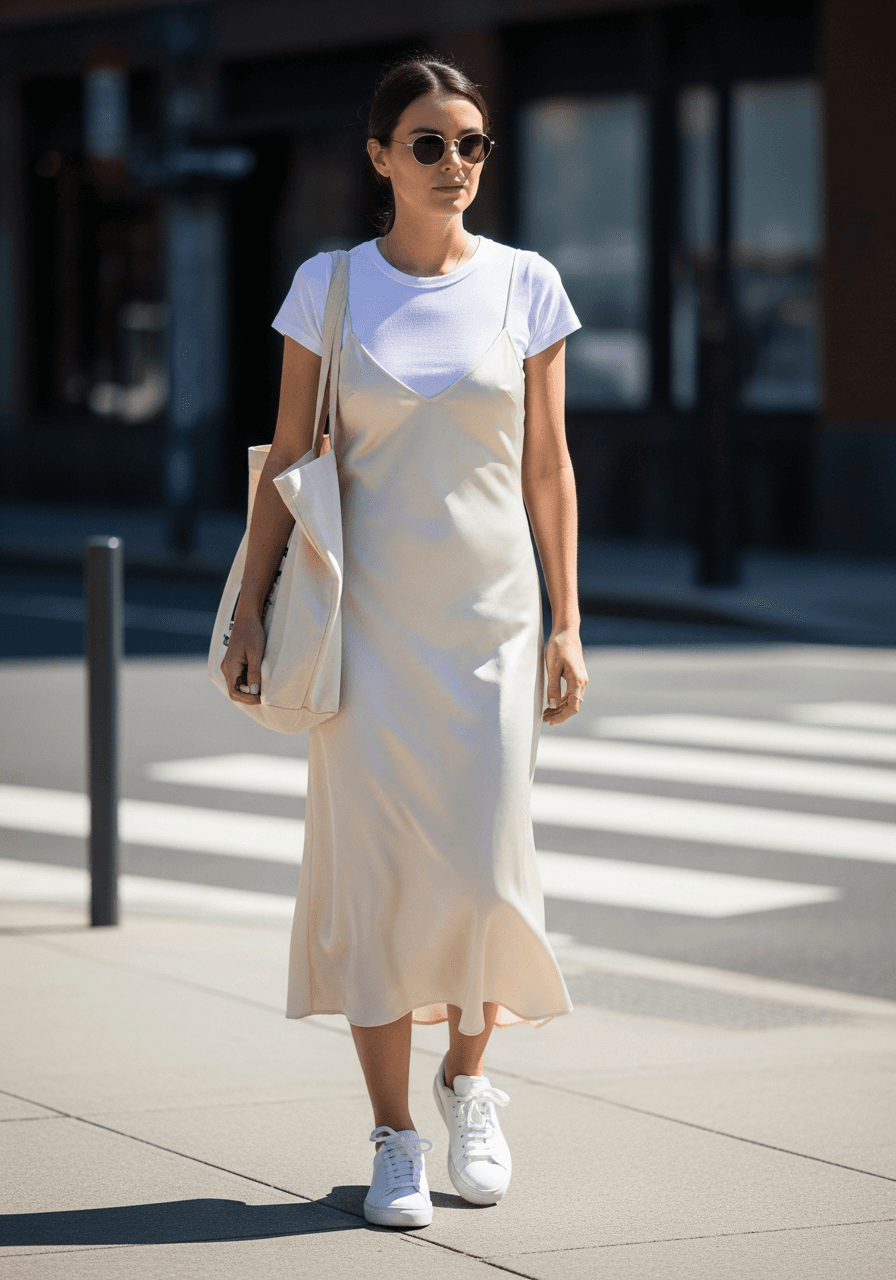
The Street Layer
- White fitted cotton t-shirt — worn underneath the slip dress
- Cream satin slip dress — over the t-shirt
- White leather sneakers
- Canvas or woven tote
Why it works
A t-shirt under a slip dress is a deliberate fabric clash: matte cotton against glossy satin. The contrast is the point, not an accident to correct. Keeping both pieces in the same color range (white and cream read as one tone) means the contrast stays in the texture rather than the palette. The t-shirt shifts the occasion from evening to daytime in a single move.
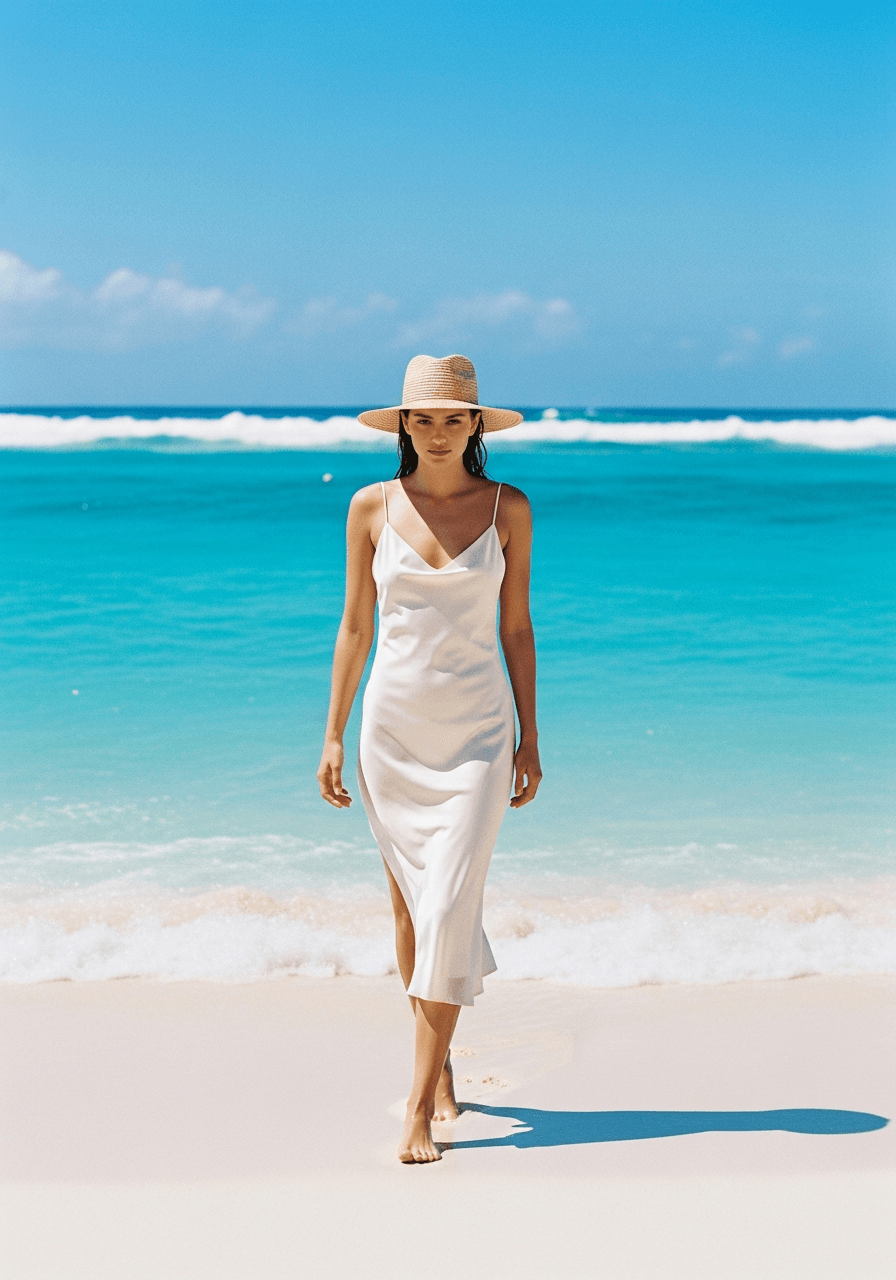
The Coastal Resort
- Cream satin slip dress — worn as a cover-up over a swimsuit
- Flat leather slides or woven sandals
- Wide-brim straw hat
- Large woven beach bag
Why it works
Worn over a swimsuit at the beach, the slip dress becomes the most intentional piece on the sand. Satin reacts to natural light and movement in a way that reads as a styling choice rather than practicality. Keep everything else relaxed and woven so the slip dress carries the elevation on its own. The whole read depends on the pieces around it staying casual.